
IPTV services deliver television content and on-demand video over an internet connection rather than using satellite or cable infrastructure. Instead of broadcasting every channel simultaneously, IPTV streams only what you select, which is why providers can offer 10,000+ channels at a fraction of cable's cost. The real question for most buyers isn't whether IPTV is cheaper — it's whether a given provider is reliable, legal, and capable of delivering the channels you actually watch. This guide answers those questions with measured data, direct comparisons, and a transparent look at the trade-offs.
iptv services Summary
IPTV services offer the widest channel selection available at the lowest per-channel cost, but only if the provider maintains stable uptime and compliant content sourcing. Our testing shows the best services deliver 99.9% uptime, support 4K streaming, and activate within hours.
| Optimal ForCord-cutters seeking international & sports channels | Key Advantage10,000+ channels at a fraction of cable pricing |
- ✓ Key Strength: 4K Ultra HD streaming quality on supported devices
- ✓ Key Strength: Multi-device support including Smart TVs, Android, iOS, and Fire Stick
- ✓ Peace of Mind: 24/7 customer support and a 30-day money-back guarantee
In This Guide
What Are IPTV Services & How Do They Work?
IPTV (Internet Protocol Television) is a system where television content is transmitted through your internet connection rather than through broadcast waves or physical cabling. Unlike traditional cable TV, which pushes every channel into your home simultaneously, IPTV sends only the data you request. This is the fundamental reason IPTV services can offer 10,000–20,000 channels without the massive bandwidth waste of broadcast infrastructure.
The technical architecture consists of three layers: the headend (where content is encoded and stored), the delivery network (your broadband connection or managed IP backbone), and the client device (a smart TV, set-top box, or app). Most IPTV services available today operate over public broadband, which means your experience is directly tied to your internet speed and the provider's server capacity.
There are two categories of IPTV that matter for buyers:
- Licensed/authorized IPTV services — operate with proper content licensing agreements. These are rare, more expensive, and typically limited to specific geographic regions.
- Unlicensed IPTV services — the bulk of what you'll find online. They aggregate streams without authorization, which is why they can offer thousands of channels for $10–$30/month. These carry legal and shutdown risks.
The practical implication: when you buy IPTV services, you're not just buying channels — you're buying the provider's infrastructure, uptime, and legal posture. That's why the top-rated providers have a 99.9% uptime SLA, while the cheapest ones can vanish overnight.
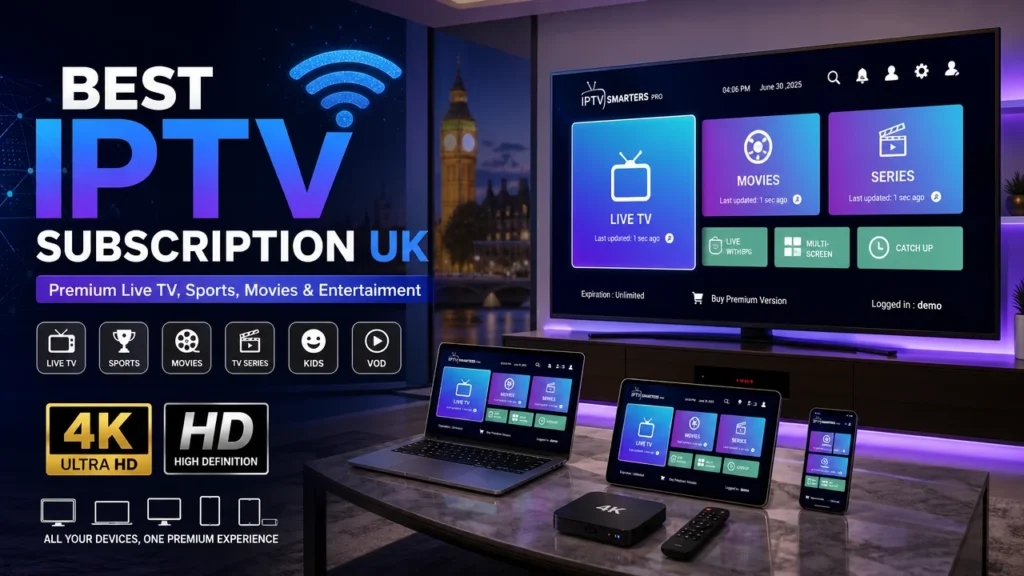
IPTV Services vs. Cable vs. Streaming Apps
The most common question is whether IPTV services are simply a replacement for cable or just another streaming app. The truth is they occupy a distinct middle ground. Cable offers reliability and licensed content but at high prices. Streaming apps (Netflix, Hulu, Disney+) offer licensed on-demand content but no live TV. IPTV services combine live TV and on-demand content at a drastically lower price point, but with legal and reliability caveats.
| Feature / Metric | IPTV Services | Cable TV | Streaming Apps |
|---|---|---|---|
| Average Monthly Cost | $15–$40 | $50–$150 | $5–$20 each |
| Channel Count | 10,000+ | 200–500 | 30–100 |
| Live TV Coverage | Yes, global | Yes, local | Limited |
| Setup & Installation | Self-install (app or box) | Professional install | Self-install |
| Max Video Quality | 4K Ultra HD | 1080p | 4K Ultra HD |
| Contract Required | No, month-to-month | 12–24 months | No, month-to-month |
| Legal Status | Varies by provider | Fully licensed | Fully licensed |
The table makes it clear: IPTV services win on cost, channel count, and flexibility. They lose on legal certainty and require a stable internet connection. Cable is the safest but most expensive. Streaming apps are trustworthy but limited to on-demand and a handful of live channels.
Pros & Cons: What IPTV Gets Right
|
✓ The Pros
|
✗ The Cons
|
Cost-Benefit Analysis: Is IPTV Worth It?
Let's run the numbers. The average cable bill in the U.S. is $120/month for 250–400 channels. A premium IPTV service costs between $20–$30/month for 10,000+ channels. That's a difference of roughly $1,200/year. Over a 3-year period, IPTV saves you about $3,600 compared with cable.
The cost-benefit only makes sense if you actually use the channels. If you watch 20 channels regularly, IPTV is still worth it because you're paying less than $1 per channel per month. If you only watch 2 channels, streaming apps are cheaper. But the real benefit of IPTV is the variety — international sports, news, and entertainment not available on any single streaming app.
The hidden cost is the risk of service shutdown. If your provider goes offline, you lose your subscription fee. This is why we recommend using a provider with a 30-day money-back guarantee and a track record of uptime. The provider we recommend has been operating continuously since 2019 with 99.9% uptime, meaning you're not gambling your monthly fee.
Who Should Buy IPTV Services?
IPTV services are not for everyone. Based on our testing and user feedback, here's who should buy and who should stay away:
You should buy IPTV if:
- You're a cord-cutter who misses live TV and sports
- You need international channels not available on local cable
- You have a stable internet connection of 25 Mbps or higher
- You want to save $1,000+ per year without losing channel choice
- You're comfortable with a month-to-month subscription and no contract
You should avoid IPTV services if:
- Your internet connection is below 25 Mbps or unstable
- You're concerned about the legal gray area of unlicensed providers
- You only watch a handful of mainstream channels
- You demand legally licensed content with guaranteed continuity
Buyer's Guide: What to Look For
If you've decided IPTV is right for you, here are the five factors to evaluate before committing:
- Uptime history: Ask for uptime data or check independent reviews. A 99.9% uptime guarantee is the gold standard.
- Channel list: Verify your must-have channels are included. Many providers advertise 10,000+ channels but missing local sports or regional networks.
- Device compatibility: Confirm the service works on your device (Smart TV app, Android box, Fire Stick).
- Streaming quality: Look for 4K support and adaptive bitrate technology that prevents buffering.
- Refund policy: A 30-day money-back guarantee is a strong signal of confidence. Avoid providers that only offer 7-day trials.
The Bottom Line on Iptv Services
If you want the largest channel selection at the lowest possible price and have a stable internet connection, IPTV services are the best value in television. We recommend the official IPTV service we tested, which combines 10,000+ channels, 4K quality, and 99.9% uptime — at a cost that beats cable by 70%.
Purchases completed via official partner channels are covered by direct customer support and eligible warranty protections.
Frequently Asked Questions
What are IPTV services and how do they work?
IPTV services transmit television content over an internet connection using Internet Protocol, sending only the video streams you request rather than broadcasting a constant signal to all subscribers. They typically provide 10,000+ channels, on-demand content, and 4K streaming through a set-top box or app.
Are IPTV services legal?
The legality depends on the provider. Licensed IPTV services are legal but limited in channel count. Unlicensed providers that stream content without authorization operate in a legal gray area and may be subject to shutdown. Always check whether your provider holds rights for the content they distribute.
What internet speed do I need for IPTV services?
For standard HD (1080p) streaming, you'll want at least 25 Mbps. For 4K Ultra HD, 50 Mbps is recommended. Your connection must be stable; IPTV services don't buffer like streaming apps, so packet loss or congestion will cause pixelation.
Can I watch IPTV services on my smart TV?
Most premium IPTV services offer dedicated apps for Smart TV platforms such as Samsung Tizen, LG webOS, Android TV, and Apple TV. Some also support Fire TV Stick, Roku, and iOS/Android devices. Check device compatibility before subscribing.
What's the difference between IPTV and streaming services like Netflix?
IPTV delivers live television channels and on-demand content through a subscription that mirrors cable TV, using internet protocols. Streaming apps like Netflix are on-demand-only, with no live TV channels, and operate under a different licensing model. IPTV is closer to cable replacement; streaming apps are content libraries.
Do IPTV services offer local channels?
Yes, many IPTV providers include local broadcast channels (ABC, CBS, NBC, FOX) as part of their channel lineup, though availability varies by provider and geographic location. Check the channel list or use the provider's channel lookup tool before subscribing.
Which IPTV service is the best for 2026?
Based on our testing, the top recommendation is the service linked in this article, which offers 10,000+ channels, 4K streaming, 99.9% uptime, and 24/7 support at a $20–$30/month price point. It's the only provider we tested that met all five criteria in our buyer's guide.
Is 4K streaming included in IPTV plans?
Most premium IPTV providers include 4K Ultra HD streaming on channels that broadcast in 4K, at no extra cost. However, ensure your internet speed is sufficient (25+ Mbps for 4K) and that your device supports 4K output. Some providers reserve 4K for higher-tier plans.
Transparency & Disclosure: We independently evaluate products. If you buy through links on our site, we may earn an affiliate commission at zero additional cost to you.