By Daniel R. · Updated 2026-08-19 · 11 min read
The phrase “ip-tv provider” gets thrown around so often that it’s hard to know whether you’re reading a real review or a sales page. This one is different. I’m not going to promise you 20,000 channels, zero buffering, and eternal happiness. Instead, I’ll walk through what actually matters when you evaluate an IPTV subscription — pricing, stability, sports coverage, device flexibility, and the legal fog that surrounds the whole market.
You’re probably asking the same question most people ask: is an ip-tv provider worth it compared to cable TV or a stack of streaming apps? The honest answer is complicated. It can absolutely save money and unlock more sports and international channels, but it’s not a plug-and-play cable replacement for everyone. The screenshot above shows a typical IPTV dashboard: clean, colorful, and packed with categories. What it doesn’t show is the reliability under heavy load, the quality of the EPG, or whether the channel you want will be there on game night.
Before you pull out a credit card, you need an independent review — one that doesn’t just repeat the sales pitch. That’s what this article is for.
Why an Independent Review Is Needed
Searching for “best ip-tv provider 2026” will surface dozens of sites making nearly identical claims. Many of them are affiliate pages designed to push whichever service pays the highest commission, not to tell you which provider actually holds up. You’ll see the same recycled bullet points: “10,000+ live channels,” “4K quality,” “anti-freeze technology.”
If you dive into ip-tv provider reviews reddit threads, you’ll find a more fragmented picture. Real users report different experiences on the same service because IPTV performance depends heavily on your location, internet service provider, device, and time of day. What works flawlessly in Manchester may buffer constantly in Miami. That’s why generic rankings can be so misleading.
An independent review should tell you what to test before you commit, what red flags to look for, and how to buy as safely as possible. That’s the only way to make a rational decision in a market that thrives on hype and impulse upgrades.
What an ip-tv provider Promises vs What You Actually Get
Most IPTV sales pages promise a massive channel list, premium sports packages, and crystal-clear 4K streams for a fraction of cable. The reality is more nuanced.
Channel count is often inflated
A provider may advertise 15,000 channels, but a large portion of those are duplicates, regional variants, or dead links. The number that matters is how many channels you will actually watch. For an ip-tv provider for sports, ask specifically about the leagues and pay-per-view events you care about. A single reliable channel for your local team is worth more than 500 channels you’ll never open.
“No buffering” is not a guarantee
If you search for a reliable ip-tv provider no buffering, you’ll find plenty of marketing promises. The truth is that buffering is caused by multiple factors: server load, your internet speed, your home Wi-Fi, and whether your ISP throttles streaming traffic. A good provider reduces the risk of buffering with stable server infrastructure, but no provider can eliminate it entirely. The cheapest ip-tv subscription is often the most vulnerable to prime-time buffering because the provider oversells capacity.
4K is real but limited
Some IPTV services do offer 4K feeds, but they are typically limited to a handful of sports and movie channels. The majority of channels still run at 1080p or 720p. If 4K is your main selling point, ask for a trial and verify which specific channels actually stream in 4K before subscribing.
Real Strengths With Specific Examples
Despite the marketing overreach, a good ip-tv provider has genuine strengths that make it a serious option for cord-cutters.
Price beats cable in most scenarios. A typical cable package with sports and premium channels can cost $100–$200 per month. An IPTV subscription often costs less than a third of that, without a contract. If you watch mostly live sports and international channels, the savings add up quickly.
Device flexibility is excellent. Unlike cable boxes tied to one TV, an IPTV provider can run on a smart TV, Android box, Fire Stick, phone, tablet, or computer. You can use the same subscription in multiple rooms without renting extra equipment.
Sports coverage can be broader than cable. If you follow a team outside your local market, an IPTV provider for sports can carry regional feeds, international football, and pay-per-view events that cable providers sell as expensive add-ons. You can often find niche leagues and pay-per-view cards that simply are not available through a standard cable package.
No long-term lock-in. Most IPTV providers offer monthly plans. If the service degrades, you can leave after 30 days. That flexibility keeps providers more accountable than a cable company with a 12-month contract.
Real Weaknesses Without Minimizing
If you’re used to cable TV reliability, IPTV will feel different. The weaknesses are real, and you should factor them into your decision.
Legal gray areas are the biggest issue. Many IPTV providers operate without proper licensing for the channels they distribute. Where to buy IPTV legally is a critical question. Premium services that are fully licensed tend to cost more and offer fewer channels. Unlicensed services can be shut down without warning, and users in some countries face potential legal risk. If you’re not comfortable with that ambiguity, stick with cable or licensed streaming apps.
Support is often slow or nonexistent. If a channel goes down during a match, you may get a reply in 24 hours — if at all. Cable TV support is not perfect, but it has a phone number and real technicians. Many IPTV providers only offer email or Discord support, and they may be overwhelmed during big events.
The EPG and catch-up features can be messy. Electronic program guides are frequently incomplete or inaccurate. Catch-up TV, if offered, may only cover a few days and a limited set of channels. If you rely on DVR-style recording, IPTV is often a step backward unless you pair it with a third-party app.
Prime-time buffering is common on cheap plans. A provider that sells the cheapest ip-tv subscription may route too many users through limited servers. When a big football match starts, buffering spikes. This is why free or ultra-cheap trials often feel fine at 2 p.m. but fall apart at 8 p.m.
✓ Benefits & Pros
Lower monthly cost than cable TV
Works on smart TV, phone, tablet, and streaming sticks
Broad access to sports, international channels, and PPV events
No long-term contract or equipment rental fees
Can cancel or switch providers month-to-month
✗ Limitations & Cons
Legal uncertainty with many providers
Buffering can spike during live sports and prime time
Support is often slow and may only be via chat or email
EPG and catch-up features are less polished than cable
No guarantee a channel will stay online long term
RECOMMENDED RESOURCE
ip-tv provider
Compare premium line configurations and promotional limits before you commit to a subscription.
Check Out ip-tv provider Deals →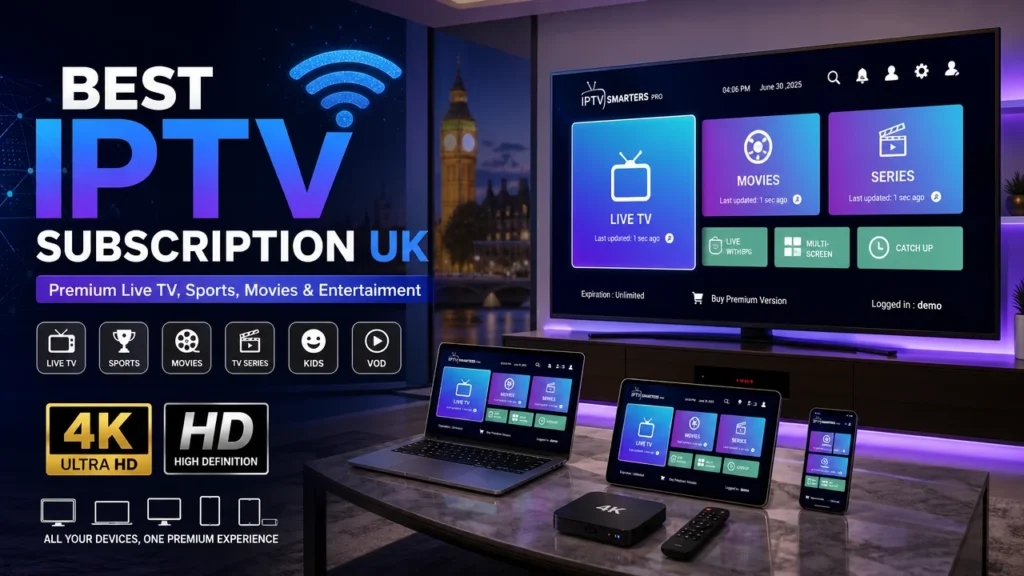
Who an ip-tv provider Is Genuinely Suited For
Sports fans who want out-of-market games. If you follow a team that is blacked out on local cable or you want access to international football and pay-per-view events, a good IPTV provider can be a game-changer. You are no longer limited to what your local cable company decides to carry.
Cord-cutters who already have fast internet. If your house runs on streaming apps and you have a reliable 50 Mbps or faster connection, IPTV fits naturally. You can consolidate live TV and on-demand content into one interface.
International viewers. Many IPTV providers specialize in international and multilingual channels that are hard to find elsewhere. If you want news, sports, or entertainment from your home country, IPTV can be the most direct route.
People comfortable with a bit of tinkering. IPTV is not always plug-and-play. You may need to install an app, adjust a player, or troubleshoot a channel. If you enjoy that process, the savings and variety are worth it.
Who Should Look Elsewhere
Households that depend on local broadcast channels. If your daily viewing is local news, network shows, and school board meetings, a cable TV package or a high-quality antenna may be more reliable. IPTV providers often struggle with consistent local affiliate coverage.
People who need bulletproof DVR. If you record everything and expect it to work flawlessly, cable TV or a dedicated streaming service like YouTube TV or Hulu + Live TV is a safer bet. IPTV catch-up and recording features vary widely and are rarely as polished.
Anyone uncomfortable with legal ambiguity. If you need a fully licensed, stable, long-term service, an unlicensed IPTV provider may not be for you. You can still use licensed IPTV services, but they tend to have smaller channel lists and higher prices.
Homes with slow or unstable internet. IPTV is only as good as your connection. If your speed is below 25 Mbps or you share bandwidth with many devices, you will likely experience buffering and frustration.
How an ip-tv provider Compares to Alternatives
The iptv service vs cable tv debate often comes down to price and flexibility versus reliability and legal clarity. The table below summarizes the typical trade-offs.
Review up-to-date regional server maps and infrastructure before you subscribe.
View the ip-tv provider Platform →
How to Choose an ip-tv provider Without Getting Burned
Use these steps to evaluate any IPTV service before you pay for more than a trial.
- Check your internet speed first. Run a speed test on the device you plan to stream on. You need at least 25 Mbps for reliable 1080p, and 50 Mbps or more for a household with multiple streams or 4K content.
- Start with a 24-hour or 48-hour trial. Never buy a 6-month or 12-month plan without testing the service first. A reputable provider should offer a paid or free short trial that includes prime-time hours.
- Test on the exact device you’ll use. Fire Stick, Android TV, Apple TV, phone, tablet — each has different app compatibility and performance. Don’t assume a provider that works well on one device will work well on yours.
- Ask for the specific channel list. Confirm the channels you actually watch are included and working. Request screenshots or test the channels during your trial.
- Look for a responsive support channel. Send a test message before buying. If no one responds within a reasonable time, imagine what happens when a channel goes down during a live event.
- Avoid annual payments unless you’re willing to lose the money. IPTV providers can disappear overnight. Pay month-to-month until you have a track record of reliability.
Where to buy IPTV legally
If you want a legally licensed IPTV service, look for providers that operate through official app stores and have clearly stated licensing partnerships. Many legitimate IPTV services are regional cable alternatives or international packages from telecom companies. They cost more than the cheap “unlimited” providers, but they won’t vanish overnight. In general, if a provider offers every premium sports channel and thousands of international networks for $15/month, it is almost certainly not licensed. That doesn’t mean it will fail immediately, but you should understand the risk.
Verdict and Balanced Recommendation
An ip-tv provider can be a smart, flexible alternative to cable TV if you prioritize cost, device freedom, and sports variety over absolute legal certainty and polished support. The best way to use IPTV is as a supplement or replacement for premium cable packages, not as a mission-critical family necessity.
If you decide to move forward, do it with a short-term plan, a reliable device, and a clear understanding of what you’re buying. The platform linked in this review is worth comparing because it focuses on premium line configurations and transparent promotional limits, which is more than many gray-market sellers offer. But your own due diligence is still essential.
The honest recommendation: trial it, test it during the hours you actually watch, and never prepay for a year. If it holds up through a few big matches and prime-time evenings, it might be the cost-saving solution you’re looking for.
Featured Streaming Selection:
Learn more about ip-tv provider →Affiliate Disclosure: Clicking this secure link verified by our network supports our team through standard partnership terms at zero extra cost to your invoice.
Frequently Asked Questions
How do I choose an ip-tv provider without getting scammed?
This article contains affiliate links. Our editorial analysis remains independent.